Thursday, May 5, 2011

Sound of Music


At the Sign of Concordance

We arrive in automobiles
conveyed from city intersections
and airport concourses,
on a winding road
that ends at three rocks
splashed by the Pacific.

We come for strange music:
not pop or classical, not
techno, rap, house, emo, folk, trance
nor any of that ilk.
What we play needs at least a sentence
perhaps a paragraph to describe.

What we love needs even more room to explain.
Music yes, but also the way the sun
hits the face after a fortnight of rain,
the way we greet each other like distant relatives,
also the Sitka spruce, and elk,
and  Salmon River, S-curving to the sea.

What we do is very simple.
We take air sweetened by violets and alder,
wiggle our fingers and blow;
into story and meditation,
into history and dance.  We are magicians,
changing oxygen into happiness.

5/2/11
At the Wind and Waves Recorder Workshop


Wednesday, April 20, 2011

This Land Is Your Land


It was evening, the salmon feast had been cleared away, and the hundred or so participants in the annual meeting of the Oregon Natural Desert Association were hanging out, listening to the local country band, the Wheeler County Ramblers, or circling the bonfire outside the dining hall at Hancock Field Station, in the John Day Fossil Beds National Monument.  We were feeling very good, helped by a keg of microbrew and the righteous tiredness of having toiled on the side of the earth all day.

I had been with a group who hiked a very steep road for two miles to remove a half mile of barbed wire fence.  Most of us had joined ONDA on a fencepull before, so we quickly found an order to the work, first untwisting the metal stays that spread the strands of wire apart, and then unbending the wire clips holding the wire to the metal posts.  Once the wire was hanging limply, we cut it and rolled it into pointy wreaths, piling them for later pickup with a truck.  Finally, the more brawny members of the group used the levered post-puller to wrench the post out of the ground.


The volunteers were mostly from the ranks of the retired and near retired, contrasting with the youthful staff of ONDA.  During the hike and work we compared our lives, finding  intersections in our backgrounds,  and we looked from the high ridge to the vistas surrounding us.  Although the day was mostly cloudy, the brown hills were starkly beautiful,  with outcroppings colored by the volcanic ash formations for which this area is known.  The one stripe of green was in the valley where a curve of the John Day river could be seen, bisecting the spring hayfields. 

I was struck by how capable humans can be, whether in putting up this fence to turn a jumble of contours into a container for cattle, or when removing the same fence, erasing the legacy of exploitation, and giving wildlife another chance to roam free.  Once we have a purpose, we can do most anything we can think of.  This has been our genius and our curse.

Back in the dining hall, the Ramblers were dutifully playing through the top one hundred hits of the 1960's. and '70's.   Of course I  knew them all,  and something in me demands that I move my feet whenever a drumkit starts pumping out a rock beat.  As I was hopping around in some semblance of dancing I perfected around 1975, the band started into the Woody Guthrie anthem, "This Land Is Your Land."  Although I had never danced to this folk song before, I realized that this song has been the hymn of my whole life.  Whether I first learned it at school, or with the neighborhood activists who gathered the local kids for "Hootenannies," this song has perfectly embodied both my nationalism and revolution in one gesture.  This land will always be yours and mine, and how to have both at once, sharing with others and treasuring it for yourself, is the eternal tension of our life on this planet.


Saturday, April 2, 2011

Sleepless In Seattle


     I have spent the last two weeks at the mercy of the flu.  It made me less able to fill my head with busyness, which changed my perspective from relentlessly purposeful to a more passive awareness.     
     "What do you want for dinner?" Robert asks, rising to the role of nurse.
     "I don't care, as long as it isn't a lot," I answer, for once throwing out all the various food rules I might otherwise invoke: as in, nothing we already had this week, nothing flown in from another hemisphere, nothing that swims in the ocean, etc.
 
      In such a mood, I stumbled on the Seattle Area Happiness survey, which I recommend, for a reality check about your own view of yourself. http://www.sustainableseattle.org/survey/GNH/en/.  Apparently, I have been exaggerating my degree of satisfaction with life.  Or more likely, I accept my cynicism as intellectual rigor, rather than the actual damper on pleasure that it is.  Anyway, I scored below average in happiness.
  
      Maybe I am too fond of the scientific method, but taking the survey made me think of the aspects of myself that pull me down.  One of them is the sheer weight of personal history.  Even when life is good in the present, I unconsciously measure today's happiness against the accumulated disappointments that have come before.  This is bolstered by the knowledge that I have proof of such disappointment, filed in shoeboxes in a closet, under the heading of mementos.  I keep cards, letters, ticket stubs, programs, and the like, in order to have a record of my life.  To be certain of my general impression of these materials, I open a box and start going through it.  Evidence of bad choices in love immediately overbalances best wishes in Christmas cards, good grades of my son, and proof of a steady diet of cultural happenings.  Reading such mementos  shows that I have a long history of struggling with disatisfactions, both in myself and others.  I continually resolve to change everything into some ideal that has yet to materialize.  No wonder I am unable to just be.

     Sickness has a way of focusing us back to the physical self.  I can't begin to philosophize about how I should live when coughing makes my ribs hurt.  But getting back to health, I do see a route to more happiness.  I begin to toss the contents of those shoeboxes.  Not everything, but the stuff that makes me feel bad.  Why did I think I would want to refresh those recollections?  After filling a grocery sack, I am starting to feel better.

Sunday, March 20, 2011

Death in the Afternoon

     On Friday I boasted that I hadn't had a cold in a year.  Today, I feel a cold invading and taking over my body.  Almost as if the Gods on Mt. Olympus felt the need to illustrate the sin of hubris to me personally.  I'm sorry!
     Before I succumb to viral domination, I must relate to the issues of the week.   First, it is amazing how we have had an earthquake, a tsunami and now we are bombing a new country, and still I can't see that this has affected day to day life in the US in any way, except reviving my worry about being prepared for catashtrophe.  I think I have convinced myself and Robert that we should store some water and food, out in the shed, where we could get it if our house fell down and didn't miraculously kill us in the process.  Why is it so hard to plan for something that only might happen?  We don't want to face a probability of disaster.  The same tendency in us doesn't want to accept global warming.  I will get my plastic storage container and start filling it with food we can use up camping, when the apocalypse doesn't come after all.
     Today I cut down an old rose bush and pried the roots out of the ground, breaking the handle off of one old shovel in the process.  The flowers were not especially pretty ones, their stalks extremely thorny, catching our arms as we reach to turn on the nearby faucet, and I have a much better plan to start a kiwi vine in the sunny spot, but I still felt like a murderer, ripping out the bush that I am sure had been there for at least twenty years.
     Meanwhile, my neighbor Barb and I compared sightings of the rat that lives among us.  She saw it in the bird feeder and I saw it dart under our front steps.   We both revile the thing but are too soft hearted to actually hunt it.  I promise to put out a trap I bought a year ago,  but shudder at being responsible for its death. We are programmed to treasure life of all kinds, even as we also know we must kill to live. Modern humans have been responsible for so much death, for so many less important reasons than to eat, that where to draw the line has become hard to see.  Does a rat have a right to its life, just like an old rosebush?
   
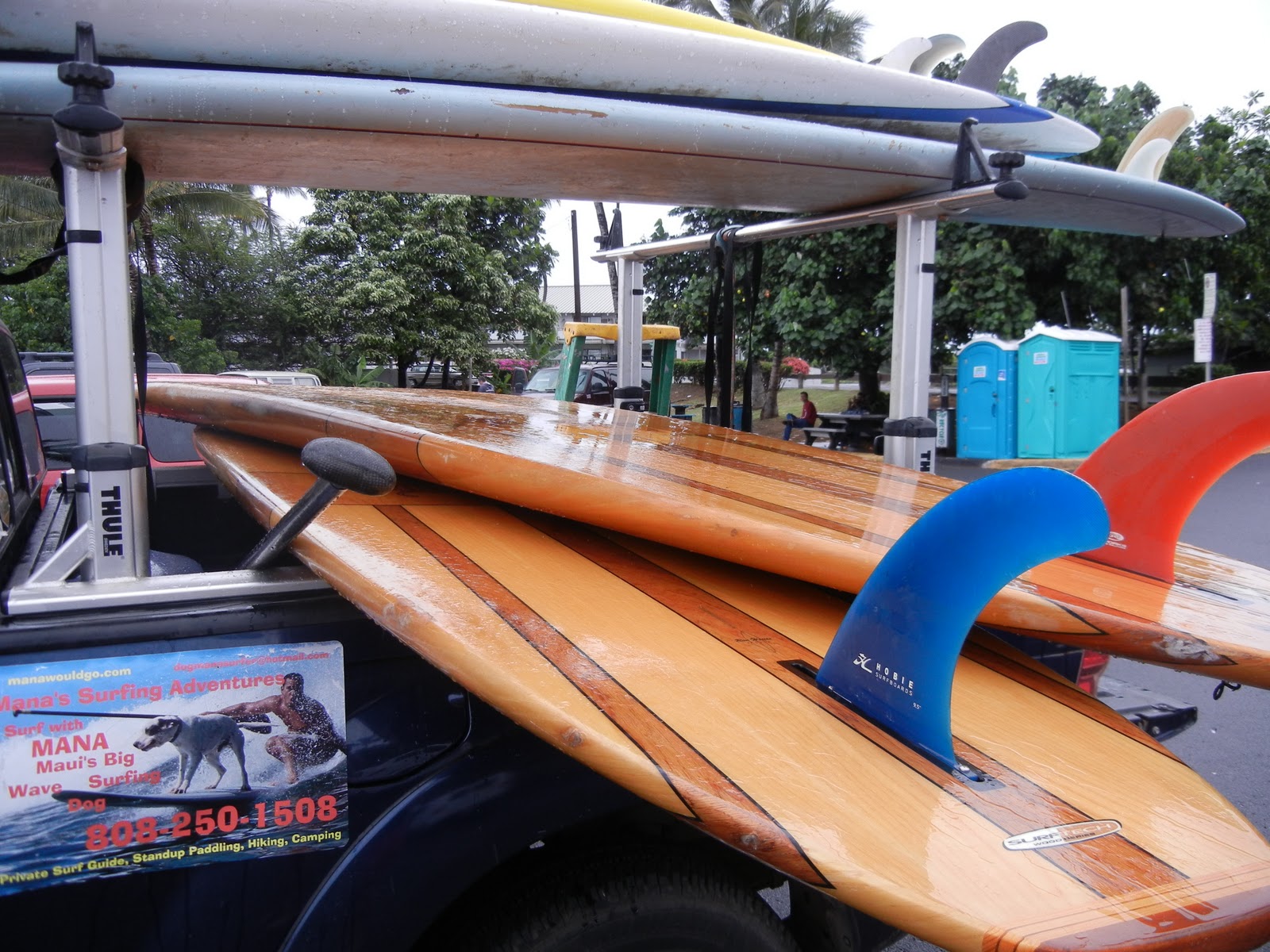
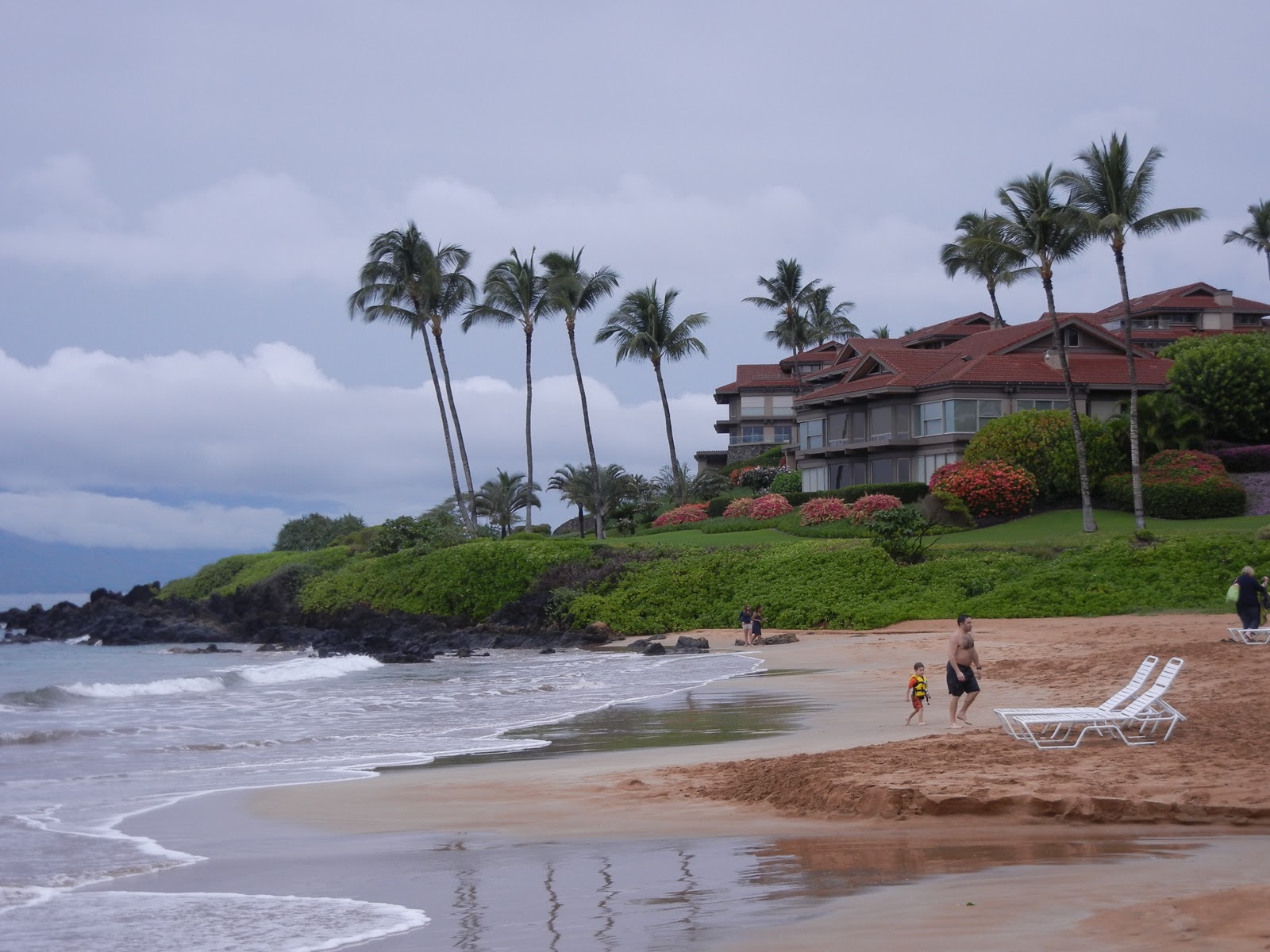
Our trip to Hawaii is receding into the past, but I will keep it alive with a few more pictures.
 
 The Stand-up Paddleboards we took a lesson on
 An old church on the quiet side of Maui
 A woodcarver in Lahaina
 A gravestone
Volcanic beach cobbles


Sunday, March 13, 2011

This Side of Paradise

I went to Maui for a week and came back with a tan wrestled from an excess of rain.  The island is shaped in a figure eight, with two volcanic breasts spanned by a plain of sugar cane.  In olden days the sugar would have been taro and fish ponds, and before that, probably a wetland filled with invertebrates and minnows.
Because the Japan earthquake and tsunami came only two days after we left, it reinforced how vulnerable islands are.  When we were there the peaks snared rain clouds like a comb grabs tangles and every afternoon the wind picked up and blew the heads of palm trees like they were speeding down a freeway in a convertible.  There is just so much water sloshing around these chunks of rock, that they have no defense against the mighty ocean.
The job of tourists is to tour and we did too much of that, inscribing the letter eight with our tires and then up to the crater which rewarded us with only torrents of rain, and one little native red honeycreeper, the i’iwi, that we dared to look for in the downpour.  Even though the resorts were perfectly manicured around lovely beaches, we could not resist the lure of the one lane roads that led to a glimpse of Hawaii, before landscapers carved away the excess vegetation.  Like all places that humans have had their way with, the proof of true wilderness is slight and we traded a view of condos for pasture land and cows.  But at least the hills tumbled down to the sea without the line of concrete blocks sheltering pairs of vacationers each sitting on their lanais enjoying fruity drinks.  And yes, we were those people also.
The best thing about Hawaii is simply the warmth of the heavy air.  Since we evolved in the hot regions of the world, I think some part of our cells craves the heat and longs to throw off the drapings of cloth we normally shield ourselves with.  Uncovering arms and legs, is perhaps the most lasting pleasure of those used to a harder climate.  Just taking off the shoes for bare feet is a revelation, sending me back to childhood in Vermont, where we went barefoot much of the summer, and the washing of the feet before bed was the last act before slipping into bed.

Back home in the rainy chilly Northwest, I am confronted with what meaning I can construct from this desire to leave what we know for some other viewpoint.  Perhaps the need to wander is as strong as the urge to bare the skin to the sun and air.  This  has put us in all parts of the globe, just lighting out for the territory because it is there.  While we were in Hawaii, the humpback whales were there too, splashing and playing just off the shore giving their babies a warm birth before they migrate to the frigid Arctic waters where food is found.  I’m not sure the idea of home is as strong as we like to claim it is.  Certainly, we seem to crave the contrast between what we know and what we don’t, and the journey that pulls us between.

Sunday, February 20, 2011

Songs in the Key of Life


I’ve told myself that this blog is only valuable (to me) if it induces semi-regular writing.  Two weeks is about the limit to my idea of regular, so I am here to honor the vow, but maybe nothing else.  Sometimes life steadily goes on but does not congeal into an idea of why.  These last two weeks have had the usual swings at purpose, but no homeruns of insight.

I planted trees with Friends of Trees two Saturdays in a row.  This frequency is unusual, but the experience is familiar, and both morally uplifting and physically demoralizing.  I meet  interesting people, enjoy the outdoors, get some carbon dioxide eaters into the ground, and use all those muscles I don’t challenge in my weekly marathons of sitting at a desk.  How could it be bad?  Yesterday had the added bonus of brilliant sun all morning.

Last week also saw the appearance of the uncommon son, the college junior home for the Canadian equivalent of Spring Break; although that nation at least gives it an academic patina, by calling it “Reading Week.”  All my motherly helpfulness returned in full force, especially since he had a friend with him, seeing Portland for the first time.  Despite my lists of important tourist locations, they mostly targetted food carts and bars, like you would expect of  21-year olds.

Then there was work.  What can you say about a job that I have done forever, but still manages to be equal parts of frustration, challenge, and fun?   Isn’t that the definition of work?  Something that compels but can’t ever be finished. 

Perhaps the best metaphor of meaning for my life is found at the swimming pool.  I go there to do laps, at least three times a week, sometimes four.  It is accurate to say that I have been swimming for almost all my life.  I’m driven partly by the sensual pleasure of the water touching every part of my body, and partly by the grim belief that if I don’t keep moving I will come to an earlier and more grisly end.   We are doubly motivated by a desire to find pleasure and stave off death.  We seem to bounce between each pole, sometimes feeling like a ping pong ball, sometimes thrumming harmoniously like a guitar being strummed.

Another frequent activity is playing recorder music with various sets of like minded players.  Last week I went to four such gatherings, a busy week.   I am not a brilliant musician by any means, but it is so satisfying to join a group that finds unity of purpose, and for a hour or two, has the tangible melody of our effort to listen to.  I’m not sure I need more than those harmonies on purpose.

Sunday, February 6, 2011

Sunday Morning


Every Sunday, over coffee and the newspaper, I am asked, either by myself or others, what will you do today?  I hate that question, especially on Sunday, where the clash between worship and work often turns into soggy indecision, and the hours tick by, removing choice by nightfall.

Today was an exception.  Although breakfast presented the usual question, the answer was at the hummingbird feeder, a blurry yellow flit, twice as big as a hummer.  I found my glasses and binoculars and hoped for a second coming.  The bird did revisit the feeder, and I was able to pull out the bird book and identify that it was a female Townsend’s warbler who had found the fountain of sweetness in the one drinking station that didn’t have the yellow grating over it, sized only for hummingbirds and not their bigger-beaked cousins.

I am a lazy birder, so having a yellow headed warbler visit my home in the winter, posing several times for a full identification from the dining table to occur, met all my needs for a religious experience.  After that, the day felt free and fanciful.  Meaning had been accomplished before 9:00 AM and I could rightfully loaf the rest of the day.  I found the perfect combination of exercise, chores, and relaxation to make it a Good Sunday.  The fact that dinner was supplied by excellent leftovers, made it even better.

Wearing down the hours of the day, I tuned into Terry Tempest Williams on the radio, who spoke wisdom as usual. She sounded a warning about our loss of knowledge of the natural world, which makes the actual biological losses so much harder to appreciate.  She also talked about our readiness to speak our opinions, rather than share our knowledge as part of the reason we continue to politically  tear ourselves apart.

To spread the word, we passed on the sighting of the Townsend’s warbler to our next door neighbor, and admired the snowdrops blooming in a friend’s yard.

She says, “I am content when wakened birds,
Before they fly, test the reality
of misty fields, by their sweet questionings;”

    -from Sunday Morning by Wallace Stevens